
Lumi 2 IPL
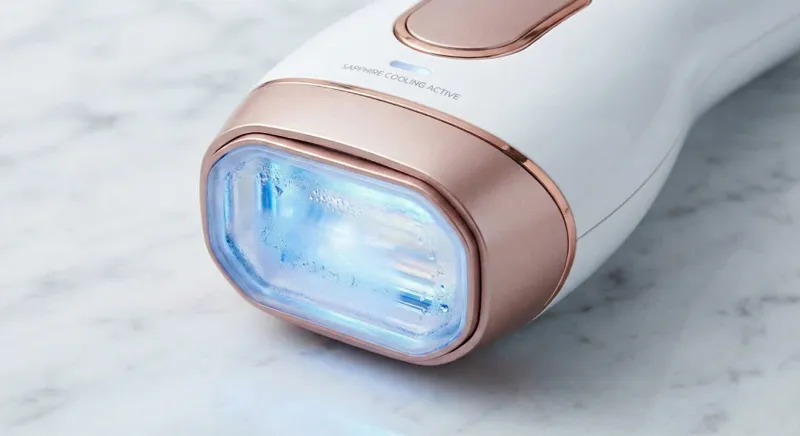
Smart Skin Sensor + Chills Skin to 10°C
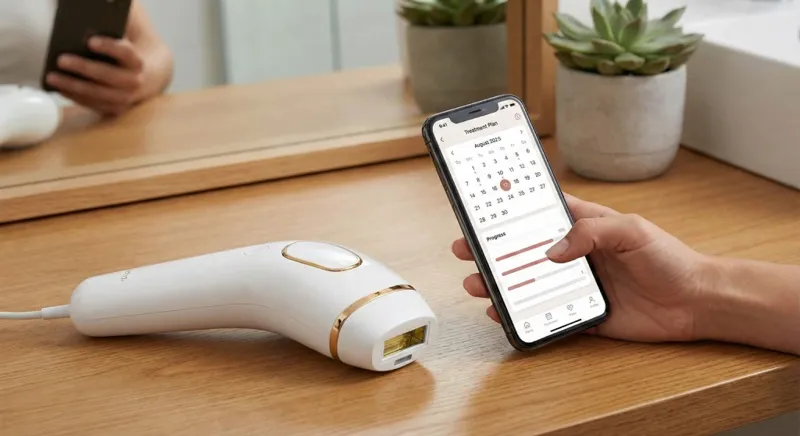
The next-generation Lumi 2 IPL device combines advanced skin sensing technology with active cooling for a comfortable, effective hair removal experience.
Contact us for current factory pricing, sampling scope, and MOQ planning for the Lumi 2 platform.
Contact us for current factory pricing, sampling scope, and MOQ planning for the Lumi 2 platform.
Accepted Payment Methods
We support PayPal, bank transfer, Stripe, Alipay, and card payments for Mastercard, VISA, JCB, Discover, Diners Club, and American Express credit or debit cards.
Specifications
- Type
- Home-use IPL (single quartz lamp)
- Cooling
- Support, sapphire ice feeling tech
- Skin detection
- Smart sensor
- Energy
- 2.33-5.33 J/cm²
- Lamp
- 999,999 flashes
- Window
- 3.0 cm²
- Wavelength
- 510-1100nm
- productDetail.lumi-2.specs.connectivity.label
- productDetail.lumi-2.specs.connectivity.value
Available Colors
Skin and hair suitability
Two things decide whether IPL is right for you: your skin tone and your natural hair colour.
Skin tone: Fitzpatrick I–IV
Suitable for skin tones from very fair through olive and light brown — Fitzpatrick types I to IV. Type V (brown skin) is suitable only at the lowest energy levels and after a patch test. Type VI (deeply pigmented skin) is not suitable: the light cannot be delivered at a safe, effective dose, so we do not recommend IPL for that skin tone.
Hair colour: all natural colours except light blonde, red and light grey
IPL works because the melanin in your hair absorbs the light and converts it into heat at the root. Dark blonde, brown and black hair contain enough melanin to be treated effectively. Light blonde, red and light grey hair contain too little, so results are poor.
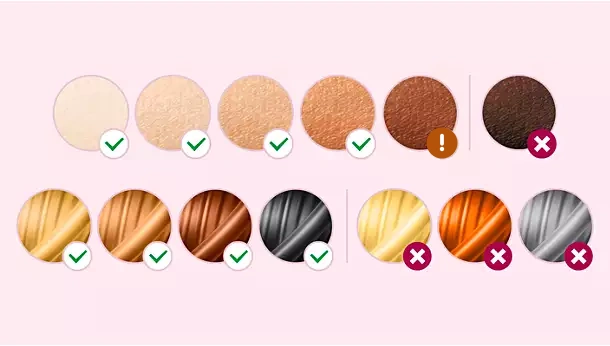
Patch-test a small area 24 hours before your first full treatment, and follow the manual for your model. Individual results vary.
Key Features
What makes Lumi 2 IPL the right choice for your brand.
Skin Cooling Technology
Active cooling system chills skin to 10°C before each flash for a nearly painless treatment experience.
Smart Skin Sensor
Real-time skin tone detection automatically adjusts energy output for safety across all skin types.
productDetail.lumi-2.features.appConnectedPrecision.title
productDetail.lumi-2.features.appConnectedPrecision.description
High Flash Capacity
999,999 flash lamp delivers years of treatments, making it ideal for long-term use.
How Lumi 2 reads your skin — and keeps up with it
Lumi 2 measures your skin before every flash and sets its own energy level from that reading. Two pieces of hardware make it work: a reflectance sensor that reads the skin, and an IGBT switch that refills the capacitor fast enough for the device to act on what the sensor found.
How the sensor reads your skin
The sensing head pairs a photosensor chip with a composite light source. The emitter does not run all the time: it starts once the device confirms contact with the skin. The light travels down a light guide to the skin and part of it comes back. Different skin tones send different amounts of energy back, and the photosensor chip decides the tone from the energy it receives. That decision sets the flash energy — each skin tone is allocated its own level.
IGBT fast flashing: keeping the capacitor ready
An IPL pulse is a capacitor discharge. The capacitor bank has to be refilled before the next pulse, and refilled fast enough that the device can change energy level between one flash and the next. Lumi 2 uses an IGBT (insulated-gate bipolar transistor) as the main switch in that circuit: it combines the low conduction losses of a bipolar transistor with the fast, voltage-controlled switching of a MOSFET, which is why pulsed-power designs use it. In practice the bank stays charged, the next pulse is ready immediately, and the energy level can follow the sensor instead of being fixed for the whole session.
Skin tone sensing is why the switch matters. The sensor decides the tone immediately before each flash, so the device has to change its energy on that timescale. An IGBT sets the flash energy by controlling how long the capacitor is allowed to discharge — a longer conduction time releases more energy, a shorter one releases less. Adjusting discharge time is fast, which is what lets the energy level follow the sensor from one flash to the next instead of being fixed before the session starts.
One function, several part numbers
An IGBT in this role is not tied to a single part number. Many equivalent devices on the market are mutually compatible for the same function, so a design does not have to depend on one supplier. We lay out our boards so that several compatible IGBTs can be fitted, which protects supply continuity and keeps the cost of the finished device under control. If your market later needs a different specification, the board does not have to be redesigned from scratch.
Five states before a flash, three of them usable
The sensor resolves five states. Two of them never fire.
| Sensor state | What Lumi 2 does |
|---|---|
| No skin contact ("air") | No flash. The window has to sit flat on the skin. |
| Very dark skin — Fitzpatrick VI | No flash. Locked out, with an alert. |
| Treatable skin tone — level 1 | Flashes at the lowest of three energy levels. |
| Treatable skin tone — level 2 | Flashes at the middle energy level. |
| Treatable skin tone — level 3 | Flashes at the highest of the three levels. |
The level is assigned from the reading, not chosen by the user. The darkest state stays locked out whatever the setting.
What the industry treats as the baseline
Skin tone recognition today works to a common baseline: no contact (air), black, and three to five skin tone levels. How a given tone is translated into flash energy is not standardised — every manufacturer sets that mapping from its own experience and design requirements, which is why two devices can behave differently on the same skin.
- No contact (air) and black: no flash — no energy is allocated at all.
- Three to five skin tone levels: each one is allocated its own flash energy.
- The tone-to-energy mapping is set per manufacturer, from experience and design limits.
Skin tone recognition is not about how many levels you split the range into. It is about how stable the reading is — a sensor that holds its decision is worth more than one that offers more steps.
Why three energy levels, and not five
Skin tone sensing here is a reflectance measurement: a light source illuminates the skin and a photosensor reads how much light comes back, so the reading depends on the device’s own emitter rather than on the light in the room. Melanin and blood both sit in that reading, and the amount of light returned shifts as blood flow in the skin shifts. Energy steps that sit close together are easier to cross: a smaller drift is enough to move a reading past a boundary and into the wrong step.
Cutting the treatable range into more than three levels does not add precision the user can act on. It adds boundaries at which the device can misread a normal skin. Three levels keep the gaps wide enough that ordinary variation — a warm room, exertion, emotional state, alcohol — stays inside its step instead of spilling into the next one.
References
Primary sources for skin typing and for how skin colour is measured, plus our own guide to skin tone sensing.
- Fitzpatrick TB. The validity and practicality of sun-reactive skin types I through VI. Archives of Dermatology, 1988;124(6):869–871.
- Ly BCK, Dyer EB, Feig JL, Chien AL, Del Bino S. Cutaneous colorimetry: a reliable technique for objective skin colour measurement. Journal of Investigative Dermatology, 2020;140(1):3–12.
- Stamatas GN, Zmudzka BZ, Kollias N, Beer JZ. Non-invasive measurements of skin pigmentation in situ. Pigment Cell Research, 2004;17(6):618–626.
- How skin tone detection works
DDP Shipping Cost
Single-unit DDP (duty-free) shipping to the markets below. The rate shown is the total per unit and includes duties and taxes, so the recipient pays nothing on delivery.
| Destination | DDP rate (USD) | Transit time | On-time rate |
|---|---|---|---|
| Japan | $17.29 | 5-7 business days | 52.2% ≤ 5 |
| Singapore | $22.34 | 5-7 business days | — |
| Philippines | $22.98 | 4-6 business days | — |
| Malaysia | $23.53 | 5-7 business days | 50.7% ≤ 6 |
| Thailand | $24.38 | 5-6 business days | — |
| United Kingdom | $26.12 | 9-10 business days | — |
| Vietnam | $28.54 | 6-7 business days | — |
| Germany | $29.10 | 9-14 business days | — |
| Netherlands | $30.93 | 9-15 business days | 57.1% ≤ 10 |
| Poland | $31.08 | 9-13 business days | 59.0% ≤ 10 |
| Belgium | $31.12 | 9-14 business days | — |
| Austria | $31.44 | 10-16 business days | 59.6% ≤ 11 |
| Ireland | $32.94 | 11-13 business days | 55.2% ≤ 12 |
| Greece | $32.94 | 17-20 business days | — |
| Luxembourg | $32.94 | 13-16 business days | — |
| Portugal | $32.94 | 13-18 business days | 52.8% ≤ 14 |
| Italy | $33.13 | 10-17 business days | — |
| Croatia | $33.35 | 8-19 business days | — |
| Czechia | $33.35 | 10-13 business days | — |
| Estonia | $33.35 | 11-14 business days | — |
| United States | $34.08 | 8-14 business days | — |
| Spain | $34.37 | 12-16 business days | — |
| Canada | $34.50 | 8-10 business days | 59.1% ≤ 9 |
| Denmark | $34.59 | 10-16 business days | 53.2% ≤ 10 |
| Finland | $34.59 | 13-16 business days | — |
| Hungary | $34.84 | 10-16 business days | 56.9% ≤ 12 |
| Lithuania | $34.84 | 9-16 business days | — |
| Slovenia | $34.84 | 10-13 business days | 58.1% ≤ 11 |
| Sweden | $36.09 | 12-16 business days | — |
| Romania | $37.09 | 10-12 business days | — |
| France | $37.31 | 7-9 business days | — |
| Australia | $39.10 | 7-9 business days | 58.0% ≤ 8 |
| Indonesia | $51.86 | 10-11 business days | — |
Markets without DDP service
No DDP carrier covers these markets yet.
Norway, Albania, Cyprus, Iceland, Serbia, Switzerland, New Zealand, India, Myanmar (Burma), South Korea
Rates are per unit and updated periodically. Ask us for a current quote on your volume.
Express Air Shipping Cost
Indicative express air freight per device, shipped on its own, by destination market. Transit times are working days after dispatch.
| Destination | Rate (USD) | Transit time | On-time rate |
|---|---|---|---|
| Macao SAR China | $21.64 | 2-3 business days | — |
| Hong Kong SAR China | $21.64 | 2-3 business days | — |
| Japan | $23.39 | 5-8 business days | — |
| South Korea | $23.95 | 4-6 business days | — |
| Vietnam | $24.82 | 6-8 business days | — |
| Indonesia | $25.65 | 7-10 business days | 57.0% ≤ 8 |
| India | $25.66 | 7-10 business days | — |
| Thailand | $25.71 | 4-9 business days | — |
| Malaysia | $25.71 | 4-6 business days | — |
| Philippines | $26.71 | 4-6 business days | — |
| United Kingdom | $26.97 | 6-8 business days | — |
| Australia | $28.30 | 7-9 business days | 55.7% ≤ 8 |
| New Zealand | $29.50 | 6-8 business days | 52.2% ≤ 7 |
| Czechia | $30.29 | 5-7 business days | 54.8% ≤ 6 |
| Hungary | $30.45 | 5-8 business days | 56.9% ≤ 6 |
| Netherlands | $30.62 | 5-7 business days | — |
| Germany | $31.03 | 5-7 business days | — |
| France | $31.20 | 5-7 business days | — |
| Greece | $31.53 | 5-7 business days | — |
| Portugal | $31.61 | 7-10 business days | — |
| Sweden | $31.78 | 7-8 business days | — |
| Spain | $32.02 | 5-8 business days | 58.2% ≤ 6 |
| Croatia | $32.13 | 9-10 business days | — |
| Belgium | $32.19 | 5-7 business days | — |
| United States | $32.27 | 5-7 business days | — |
| Denmark | $33.18 | 5-8 business days | 56.7% ≤ 7 |
| Norway | $33.27 | 7-9 business days | 54.6% ≤ 8 |
| Lithuania | $33.27 | 8-10 business days | — |
| United Arab Emirates | $33.31 | 4-5 business days | 56.5% ≤ 5 |
| Bulgaria | $33.51 | 7-10 business days | — |
| Ireland | $33.76 | 5-6 business days | — |
| Estonia | $34.01 | 8-9 business days | — |
| Luxembourg | $34.34 | 7-9 business days | — |
| Canada | $34.76 | 5-7 business days | 58.9% ≤ 6 |
| Italy | $35.50 | 6-8 business days | — |
| Slovakia | $36.00 | 6-8 business days | — |
| Switzerland | $36.66 | 6-8 business days | — |
| Austria | $37.23 | 6-8 business days | — |
| Cyprus | $38.15 | 6-8 business days | — |
| Laos | $39.67 | 6-12 business days | — |
| Cambodia | $39.67 | 5-7 business days | — |
| Saudi Arabia | $40.58 | 5-7 business days | — |
| Brunei | $41.89 | 8-10 business days | — |
| Malta | $47.79 | 4-6 business days | — |
| Romania | $47.79 | 4-6 business days | — |
| Colombia | $48.92 | 10-14 business days | 59.1% ≤ 12 |
| Chile | $49.68 | 6-10 business days | 56.0% ≤ 7 |
| Peru | $49.68 | 5-8 business days | 57.0% ≤ 6 |
| Ecuador | $49.68 | 7-10 business days | 50.0% ≤ 8 |
| Bolivia | $49.68 | 7-8 business days | — |
| Iceland | $50.18 | 4-6 business days | — |
| Vatican City | $50.18 | 6-15 business days | — |
| San Marino | $50.18 | 6-15 business days | — |
| Serbia | $50.18 | 6-15 business days | — |
| Montenegro | $50.18 | 6-15 business days | — |
| Albania | $50.18 | 6-15 business days | — |
| Moldova | $50.18 | 6-15 business days | — |
| Lebanon | $50.18 | 8-10 business days | — |
| Monaco | $50.25 | — | — |
| South Africa | $52.51 | 6-9 business days | 57.9% ≤ 7 |
| Poland | $52.51 | 6-9 business days | 57.9% ≤ 7 |
| Pakistan | $52.51 | 5-9 business days | — |
| Puerto Rico | $53.55 | 4-6 business days | — |
| Liechtenstein | $58.54 | 5-16 business days | — |
| Israel | $60.45 | 6-13 business days | — |
| Timor-Leste | $61.70 | 19-30 business days | — |
| Bangladesh | $61.70 | 19-30 business days | — |
| Bhutan | $61.70 | 19-30 business days | — |
| Mongolia | $68.13 | 13-16 business days | — |
| Kazakhstan | $69.76 | 12-13 business days | — |
| Uzbekistan | $69.76 | 6-13 business days | — |
| Turkmenistan | $69.76 | 6-13 business days | — |
| Kyrgyzstan | $69.76 | 6-13 business days | — |
| Azerbaijan | $69.76 | 5-13 business days | — |
| Armenia | $69.76 | 6-13 business days | — |
| Sri Lanka | $69.77 | 8-10 business days | — |
| North Macedonia | $69.80 | 6-13 business days | — |
| Georgia | $69.80 | 5-13 business days | — |
| Venezuela | $69.87 | 7-13 business days | — |
| Brazil | $69.95 | 8-11 business days | — |
| Argentina | $69.95 | 10-12 business days | — |
| Paraguay | $69.95 | 6-8 business days | — |
| Uruguay | $69.95 | 7-13 business days | — |
| Guyana | $69.95 | 7-13 business days | — |
| Suriname | $69.95 | 7-13 business days | — |
| Nepal | $74.96 | 6-8 business days | — |
| Iraq | $74.96 | 6-13 business days | — |
| Jordan | $74.96 | 6-13 business days | — |
| Oman | $74.96 | 6-13 business days | — |
| Qatar | $74.96 | 6-13 business days | — |
| Bahrain | $74.96 | 6-13 business days | — |
| Kuwait | $74.96 | 6-13 business days | — |
| Maldives | $78.31 | 6-10 business days | — |
| Réunion | $94.22 | 5-10 business days | — |
Express air is not available to Myanmar (Burma) at the moment.
Bulk orders change this arithmetic. Consolidate 50 units into one shipment and the freight per unit usually lands under USD 6 to 8. Sea freight under DDP brings it down further.
Interested in Lumi 2 IPL?
Contact our team to discuss customization options, MOQ, pricing, and sample requests for your brand.
Product Customization & IPL Basics
Practical answers on features, treatment positioning, and product-use education that supports both sales and launch readiness.