Two Waxing Sessions and My Leg Hair Never Grew Back? One User's Real Story
A Reddit case of zero leg-hair regrowth after two waxing sessions points to follicular miniaturization, prolonged dormancy, and why waxing is not a reliable path to permanent hair removal.
Citable Summary
What is this article about?
This article explains Two Waxing Sessions and My Leg Hair Never Grew Back? One User's Real Story for teams evaluating or building private-label IPL hair removal products. It covers practical considerations for OEM/ODM execution, including how manufacturing choices can influence product experience, compliance planning, and launch readiness. The goal is to provide a self-contained overview that readers can reference when comparing options, preparing RFQs, or aligning internal stakeholders on requirements. Where relevant, the discussion connects component-level decisions (such as cooling, filters, lamp cartridges, sensors, and power design) with end-user comfort and repeatable production outcomes. The key takeaway is a clearer set of decision criteria you can use to reduce risk and move from concept to scalable manufacturing with fewer iterations.
An accidental “permanent hair removal” result sounds like a miracle until you ask the obvious question: what biological limit did those hair follicles actually hit?
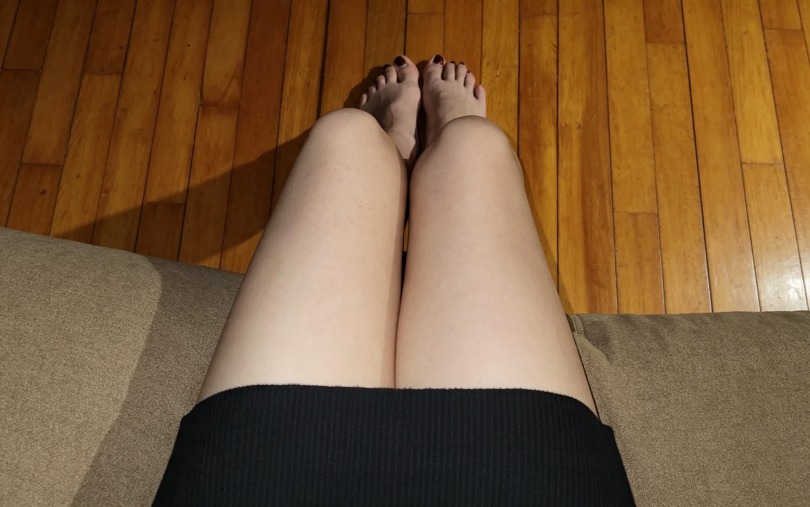
A Reddit user recently shared a perplexing experience. After just two waxing sessions on their legs, the hair stopped growing entirely for more than a year. They said they were perfectly fine with the result, but they were genuinely curious about the cause and whether the hair loss was truly permanent or simply delayed.
Let me cut straight to the conclusion:
This is far more likely to be follicular miniaturization, prolonged dormancy, or severe structural damage than clean, total follicle death.
That distinction matters because “no visible regrowth” and “the follicle is biologically dead” are not the same thing.
The Hard Truth About Waxing and Follicular Trauma
Waxing is officially classified as a temporary hair removal method. That classification is technically correct, but it hides an important physiological reality: repeated physical epilation can create cumulative damage inside the follicle.
In most users, that damage is limited. Hair returns. Sometimes it returns a bit finer, a bit slower, or a bit patchier.
But a full year of zero visible regrowth after only two waxing sessions is not a normal outcome. It strongly suggests that the follicular structures responsible for restarting growth were disrupted well beyond what the ordinary hair cycle would predict.
This is where people get confused. They assume waxing either “works temporarily” or “does nothing long term.” That is too simplistic. Mechanical removal can absolutely push some follicles into abnormal behavior, especially when the follicle is vulnerable, inflamed, or repeatedly traumatized in the same growth phase.
Why Did Only Two Sessions Produce Such a Drastic Result?
To understand that, you have to look at waxing at the follicle level rather than the beauty-routine level.
1. Waxing Does Not Merely Remove Surface Hair
Shaving cuts the hair shaft at skin level. Waxing does something much more violent: it forcibly extracts the hair shaft from the follicle, often along with the bulb and tissue attachments deep in the dermis.
That matters because the follicle is not just a tunnel in the skin. It is a living mini-organ. The dermal papilla and surrounding follicular stem-cell environment help regulate whether a new anagen cycle begins.
Disrupt that signaling environment hard enough, and the next growth cycle can stall.
2. Anagen-Phase Hairs Are More Vulnerable to Deep Extraction
Not all hairs are in the same cycle phase at the same time.
Only hairs in the anagen phase are fully anchored and actively growing, which means they are more likely to be pulled out with deeper follicular structures under aggressive epilation.
If this user happened to have an unusually high proportion of leg hairs in anagen during both waxing sessions, the mechanical extraction force could have affected more follicles than usual and done more structural damage than a typical waxing event.
That is not the common scenario. But biologically, it is absolutely plausible.
3. Mechanical Trauma Can Trigger Inflammation, Miniaturization, and Follicular Shutdown
This is the real mechanism, and it is different from IPL or laser.
Waxing does not remove hair by controlled photothermal injury. Instead, it creates mechanical tearing followed by a localized inflammatory response. In some cases, that inflammatory environment can damage dermal papilla cells, distort the follicle, and interfere with the follicle’s ability to re-enter active growth.
Once dermal papilla function drops below a critical threshold, three things can happen:
- the follicle produces thinner, weaker hairs,
- the follicle remains stuck in an unusually long resting phase,
- or the follicle becomes so compromised that visible terminal-hair regrowth effectively disappears.
From the outside, all three outcomes can look like “the hair never came back.” But biologically, they are not identical.
Permanent Loss vs. Eventual Regrowth: The Real Bet
If you force me to take a side, I would say this user’s outcome is more likely to represent durable loss or near-durable inactivation than normal delayed regrowth.
Here is the practical breakdown:
| Scenario | Biological Basis | Likelihood in This Case |
|---|---|---|
| Permanent loss | Dermal papilla cells are irreversibly damaged, and the follicle cannot restart a normal anagen cycle. | High |
| Eventual regrowth | Stem cells remain intact, papilla damage is limited, and the follicle is only in an extended telogen phase. | Low |
| Hair miniaturization | The follicle survives but now produces vellus-like hairs that are too fine and light to notice easily. | Moderate |
Why is eventual regrowth the weakest explanation here?
Because the normal telogen window does not usually stretch to a full year in this context. Once you reach that kind of timeline, ordinary cycle delay becomes a less convincing explanation than meaningful follicular damage.
The one caveat is this: some of these follicles may not be truly “gone.” They may simply be producing hair so miniaturized, depigmented, or infrequent that the user interprets it as complete absence. Without dermatoscopic examination, that distinction remains invisible.
What the Dermatology Logic Actually Supports
Dermatology literature has long acknowledged a basic truth that consumer marketing tends to avoid:
repeated follicular injury can reduce hair growth permanently in at least some users.
That does not mean waxing is a reliable permanent-hair-removal tool. It means follicular trauma is biologically real.
The difference is predictability.
IPL and laser aim to create controlled follicular injury. Waxing creates uncontrolled mechanical trauma. One is designed around repeatable parameters. The other is not.
So yes, this Reddit user may have crossed the biological threshold where those follicles can no longer produce visible terminal hairs. But that does not make waxing an intelligent strategy. It makes it an accidental outlier.
If You Want Permanent Hair Removal, Waxing Is a Trap
This is the point where I need to be blunt.
If your goal is reliable, predictable, scientifically grounded long-term hair reduction, waxing is the wrong tool.
Here is why:
Waxing Is Built for Temporary Results
Its intended outcome is a few weeks of smooth skin. That is the business model. That is the biological expectation. Anything beyond that is incidental, not engineered.
The Long-Term Outcome Is Uncontrollable
Some users will see normal regrowth. Some will see sparser regrowth. Some will get ingrown hairs, folliculitis, irritation, or pigment problems. A tiny minority may push certain follicles into long dormancy or practical inactivation.
That is not precision. That is randomness.
IPL Is the Rational Alternative
If you want lasting reduction, IPL remains the more rational and medically coherent path.
IPL works through selective photothermolysis. It targets melanin in the follicle and delivers controlled thermal injury to the structures responsible for future growth. The process is gradual, measurable, and far more predictable than hoping repeated waxing somehow injures the right follicles in the right way without collateral problems.
Waxing can still serve a purpose as a short-term grooming method. It is just not a serious permanent-hair-removal strategy.
Final Verdict
This user appears to have achieved, through two waxing sessions, an outcome that most people associate with multiple sessions of light-based hair reduction.
But that happened through uncontrolled physical trauma, not through a safe or predictable biological process.
A full year of no visible leg-hair regrowth strongly suggests one of three things:
- severe follicular miniaturization,
- prolonged functional dormancy,
- or near-permanent loss of terminal-hair production.
None of those outcomes should be romanticized.
They are not reproducible on demand. They are not risk-free. And they are not evidence that waxing is secretly a superior permanent-hair-removal method.
If you want smooth skin for a few weeks, waxing does what it is supposed to do.
If you want lasting hair reduction with a method that is actually designed for that purpose, move toward IPL instead of gambling on accidental follicular trauma.
Need a project-specific answer?
Talk to our manufacturing team
Contact the team to discuss your market, volume, compliance needs, and product direction.
Related articles
Continue reading
Clinical Data: Why IPL Hair Removal Is Safe When Used Correctly
A clinical-style explanation of IPL safety: what studies and real-world usage typically report, what side effects look like, and why most risks are predictable and preventable.
Read →
Safe At-Home IPL Protocol: Frequency, Patch Test, and Settings
A practical safety protocol for at-home IPL hair reduction: how to patch test, how often to use IPL, and how to ramp settings safely to reduce burn and pigment risks.
Read →
IPL vs Laser Hair Removal: Which Is Safer?
A safety-first comparison of IPL vs laser: how they deliver energy, what risks differ, and why the safest choice depends on skin type, settings, and operator control.
Read →