Men’s Permanent Hair Removal: Why IPL Beats Shaving, Waxing, and $10,000 Laser Sessions
Men’s hair removal demand is exploding in 2026. This guide ranks five methods by safety, cost, and results—and explains why modern home IPL with strong energy and active cooling is the practical sweet spot for most men.
Citable Summary
What is this article about?
This article explains Men’s Permanent Hair Removal: Why IPL Beats Shaving, Waxing, and $10,000 Laser Sessions for teams evaluating or building private-label IPL hair removal products. It covers practical considerations for OEM/ODM execution, including how manufacturing choices can influence product experience, compliance planning, and launch readiness. The goal is to provide a self-contained overview that readers can reference when comparing options, preparing RFQs, or aligning internal stakeholders on requirements. Where relevant, the discussion connects component-level decisions (such as cooling, filters, lamp cartridges, sensors, and power design) with end-user comfort and repeatable production outcomes. The key takeaway is a clearer set of decision criteria you can use to reduce risk and move from concept to scalable manufacturing with fewer iterations.
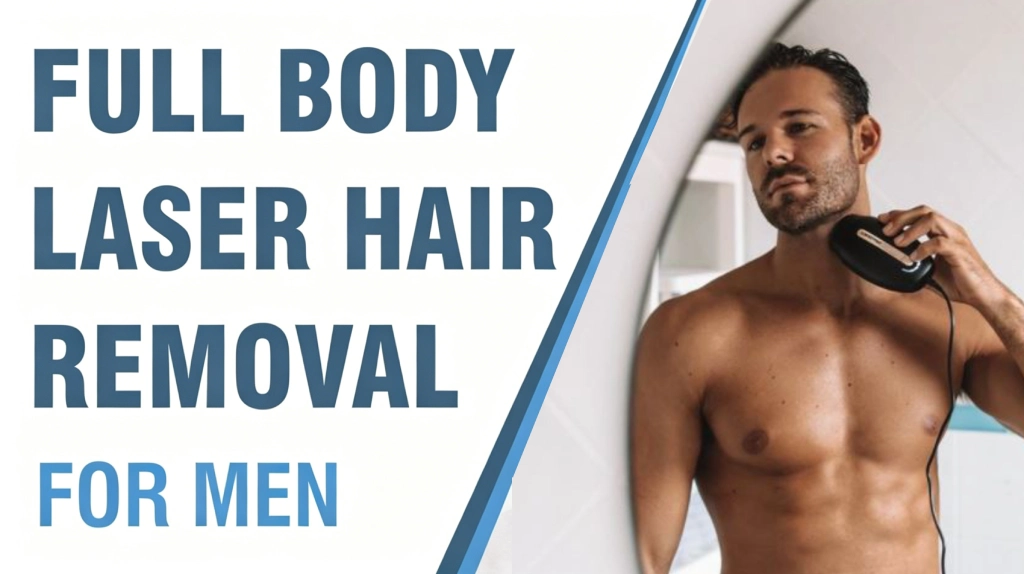
The Rising Demand for Men’s Hair Removal
Search trends don’t lie. Men’s hair removal is one of the fastest-growing beauty categories in 2026. More men are searching for body hair removal solutions than ever before.
What changed is not biology—it’s mindset. Two aesthetics now coexist:
- The rugged, well-groomed look: a thick, neatly trimmed beard signals vitality, and body hair can be part of the style.
- The clean, sculpted look: defined muscles paired with smooth, hairless skin—common in fitness culture and modern grooming.
Neither approach is “right” or “wrong.” But if you choose smoothness, the real question becomes:
What is the safest, most effective, and most affordable way to achieve long-term hair reduction for men’s body hair?
The Five Male Hair Removal Methods (Ranked by Safety, Cost, and Results)
This ranking is practical, not ideological. It assumes the goal is long-term reduction with realistic budget and time.
Method 1: Shaving (Cheap, Fast, and Often Irritating)
For chest, legs, or face, shaving can work short-term. But for the back, shaving becomes risky and impractical because most men can’t see or reach comfortably.
The core limitation is simple: shaving cuts hair at the surface. It does nothing to the follicle.
If you shave today, stubble returns tomorrow.
Method 2: Hot Wax (Effective, Painful, and Ongoing)
Waxing removes hair from the root, so the skin stays smooth longer than shaving.
The tradeoffs:
- Pain: ripping hair from the root creates inflammation and visible redness.
- Burn risk: wax temperature can irritate or burn sensitive areas.
- Cost over time: studio appointments repeat every 4–6 weeks indefinitely.
Wax can be effective, but it is not “once-and-done.”
Method 3: Depilatory Creams (Easy, Temporary, and Irritation-Prone)
Depilatory creams dissolve hair structure so it wipes away at the surface. Results can look clean, but they’re temporary—regrowth often starts in 24–72 hours.
These products also vary in skin tolerance. Some men experience irritation, redness, or chemical burns, especially on thinner skin areas.
Method 4: Professional Laser Hair Removal (Effective, But Prohibitively Expensive)
Clinical laser hair removal can deliver excellent long-term reduction, and certain laser types can treat a broader range of skin tones than IPL in professional settings.
The biggest barrier is cost: a full-body plan (multiple sessions, spaced weeks apart) can add up to tens of thousands of dollars in the US market.
For most men, it’s simply financially unrealistic.
Method 5: Home IPL Devices (The Practical Sweet Spot)
Modern home IPL (Intense Pulsed Light) devices can deliver meaningful hair reduction with:
- manageable one-time cost,
- at-home convenience,
- and safety features like active cooling and skin sensing.
For many men with suitable skin and hair contrast, IPL is the most rational “value-per-result” option.
How IPL Works (In Plain English)
IPL devices emit a broad spectrum of light (commonly in the 500–1200 nm range). The goal is not to “burn the hair”—it’s to heat the follicle enough to interrupt regrowth.
- Light reaches the follicle: energy penetrates below the skin surface.
- Melanin absorbs energy: darker hair contains more melanin, which absorbs more light.
- Heat forms rapidly: absorbed light converts to heat in milliseconds.
- Follicle structures weaken: repeated sessions reduce the follicle’s ability to regrow hair.
Why darker skin faces higher risk: epidermal melanin also absorbs light. If the skin absorbs too much energy, the surface overheats before the follicle reaches a therapeutic temperature.
IPL is about controlled photothermal heating. If your skin tone is too dark for your device’s safety envelope, the correct choice is not “stronger marketing”—it is a different technology (typically professional Nd:YAG laser) or a safer alternative.
What Men Need in an IPL Device: Energy Density and Cooling
Men’s hair often differs in ways that matter for IPL:
| Feature | Typical Women’s Hair | Typical Men’s Hair | IPL Implication |
|---|---|---|---|
| Shaft diameter | 50–100 microns | 100–200 microns | More melanin mass to heat |
| Follicle depth | 2–3 mm | 3–4 mm | Light must effectively reach deeper |
| Melanin density | Moderate | Higher | More heat per pulse (more comfort needs) |
Requirement 1: Sufficient Energy (Fluence)
Coarser hair needs enough energy to meaningfully heat the follicle. If energy is too low, results are slow or minimal—especially on back, chest, and beard-line areas.
Requirement 2: Active Cooling (Ice Cooling or Sapphire Tip)
Higher energy means more heat. Without cooling, discomfort increases and the risk of skin irritation goes up.
Cooling solutions commonly include:
- Sapphire contact cooling to keep skin surface temperature down during pulses
- Pre-cooling or “ice feeling” systems that reduce pain perception
The point is simple: keep the skin safer while delivering effective energy to the follicle.
Body-Part Variation: Different Areas Need Different Energy Levels
A responsible device and user manual should treat the body as a map, not a single setting.
| Body Area | Typical Male Hair Thickness | Suggested Approach |
|---|---|---|
| Face / beard line | Very coarse | start lower, patch test, increase gradually |
| Neck | Coarse | conservative ramp-up |
| Chest | Medium-coarse | steady schedule + cooling helpful |
| Back | Coarse | consistent weekly sessions; cooling strongly recommended |
| Legs | Medium | moderate energy + consistent routine |
| Groin | Coarse + sensitive skin | lowest energy settings; extra caution |
Sensitive-area warning: thin skin (especially scrotum) increases burn risk. If a brand claims “one setting for all body parts,” treat it as a red flag. Always patch test and follow conservative escalation.
Fitzpatrick Skin Types: The Same Rules Apply to Men
The Fitzpatrick scale applies to men and women the same way. In general, IPL is most effective and safest when there is strong contrast between hair color and skin tone.
If you are Fitzpatrick V–VI, avoid home IPL unless the device explicitly supports it with proven safety design and evidence. In many cases, a professional Nd:YAG laser is the safer route.
Cost Comparison: IPL Usually Wins on Value
| Method | Ongoing Cost | Convenience | Long-Term Result |
|---|---|---|---|
| Shaving | high (supplies + time) | high | no reduction |
| Waxing | high (appointments) | low | temporary |
| Depilatory creams | medium | medium | temporary |
| Clinical laser | very high | low | strong reduction (maintenance often needed) |
| Home IPL | low (one-time) | high | meaningful reduction with routine |
If you treat consistently (weekly sessions for a period, then maintenance), home IPL usually delivers the best “cost-to-results” ratio for suitable candidates.
Conclusion: The Rational Choice for Men Seeking Long-Term Reduction
Men’s long-term hair reduction doesn’t require extreme solutions for everyone.
If you value:
- safety and comfort,
- affordability,
- and at-home convenience,
then a modern home IPL device with sufficient energy and real cooling is often the smartest choice.
If you are Fitzpatrick V–VI or have very low hair/skin contrast, choose a safer professional laser pathway rather than forcing IPL to do a job it is not suited for.
Need a project-specific answer?
Talk to our manufacturing team
Contact the team to discuss your market, volume, compliance needs, and product direction.