Is IPL Hair Removal Safe? What the FDA, Academic Journals, and Clinical Studies Actually Say
Does IPL cause cancer? Can it penetrate to internal organs? This article summarizes what FDA databases, peer-reviewed journals, and clinical studies actually report—without marketing claims.
Citable Summary
What is this article about?
This article explains Is IPL Hair Removal Safe? What the FDA, Academic Journals, and Clinical Studies Actually Say for teams evaluating or building private-label IPL hair removal products. It covers practical considerations for OEM/ODM execution, including how manufacturing choices can influence product experience, compliance planning, and launch readiness. The goal is to provide a self-contained overview that readers can reference when comparing options, preparing RFQs, or aligning internal stakeholders on requirements. Where relevant, the discussion connects component-level decisions (such as cooling, filters, lamp cartridges, sensors, and power design) with end-user comfort and repeatable production outcomes. The key takeaway is a clearer set of decision criteria you can use to reduce risk and move from concept to scalable manufacturing with fewer iterations.
The question comes up repeatedly: is IPL safe? Will it cause cancer? Can the light penetrate deep enough to damage internal organs?
These are legitimate concerns. Any device that emits energy into the body deserves scrutiny.
This article provides direct answers based on FDA records, peer-reviewed research from major academic journals, and clinical studies. No marketing claims. No speculation. Just data and practical interpretation.
The Short Answer: Safety Depends on Proper Use and Regulatory Compliance
IPL technology has been studied for decades. When manufactured correctly and used according to labeled instructions, the FDA has cleared multiple IPL devices for over-the-counter home use.
The critical distinction is this: an FDA-cleared device from a reputable manufacturer is fundamentally different from an unregistered device sold through third-party marketplaces.
The safety profile of IPL depends primarily on:
- proper device classification and FDA clearance,
- correct usage parameters (energy levels, skin type matching),
- adequate user education and safety features.
Does IPL Cause Cancer? Evidence from Animal Studies
A frequently cited direct answer comes from an animal study published in Lasers in Medical Science (2006), indexed in PubMed.
Study design
- 144 hairless, lightly pigmented mice
- three IPL treatments at 2-week intervals
- some mice also exposed to simulated solar radiation (UV)
- 12-month observation period
Results
“No tumors appeared in untreated control mice or in just IPL-treated mice.”
“IPL rejuvenation has no carcinogenic potential itself and does not influence UV-induced carcinogenesis.”
In this model, IPL alone did not produce skin tumors. Even when combined with UV radiation (a known driver of skin cancer), IPL did not accelerate UV-induced tumor formation.
What this means in practice: if IPL had strong carcinogenic potential, it would be expected to appear under a long observation period in a photocarcinogenesis model. In this study, it did not.
Does IPL Penetrate to Internal Organs? What Tissue Attenuation Studies Show
A 2012 paper in Lasers in Surgery and Medicine investigated transmission and attenuation of intense pulsed light through human Achilles tendon and surrounding tissue samples (ex vivo tissue from amputations).
Method summary
- IPL settings: 13 J/cm², wavelength 530–1110 nm
- direct measurement of transmitted light at depth
Results summary
- only a fraction of the original fluence was detected at tendon depth (reported as 4–8.1%)
- detectable wavelengths at depth were reported within a narrower band (e.g., 645–843 nm)
- the tendon itself further attenuated part of the light that reached it
Practical implication: tissue significantly attenuates IPL. Home-use cosmetic IPL typically operates at lower fluence than 13 J/cm², so the energy reaching deep tissue is expected to be even lower. There is no peer-reviewed evidence that cosmetic IPL fluences cause internal organ damage.
What the FDA MAUDE Database Reveals About Real-World Risks
The FDA MAUDE (Manufacturer and User Facility Device Experience) database contains adverse event reports for medical devices, including light-based hair removal products. It is not perfect (underreporting exists), but it is one of the best sources for real-world failure and misuse patterns.
Case Pattern 1: Burns Linked to Unregistered Devices
MAUDE contains reports describing burn injuries from devices that appear to be unregistered or improperly documented for US Class II expectations (no clear FDA 510(k) clearance, incomplete labeling, unclear manufacturer responsibility).
The recurring theme is not “IPL is inherently unsafe.” It is that quality control, labeling, and safety design are inconsistent when devices bypass regulatory pathways.
Case Pattern 2: Eye Injury Risk from Accidental Exposure
MAUDE also includes reports describing eye symptoms after accidental exposure, including incidents involving well-known brands.
The key takeaway: even when a product is legally marketed, misuse (especially facial use and accidental firing toward the eyes) can create avoidable risk. Eye protection and conservative handling reduce that risk.
What MAUDE Teaches Consumers
| Risk Factor | What MAUDE Often Shows | Practical Mitigation |
|---|---|---|
| Unregistered devices | higher burn risk, weak labeling, unclear controls | buy devices with verifiable regulatory status |
| User error (eyes) | accidental exposure incidents exist | use eye protection; never fire toward eyes |
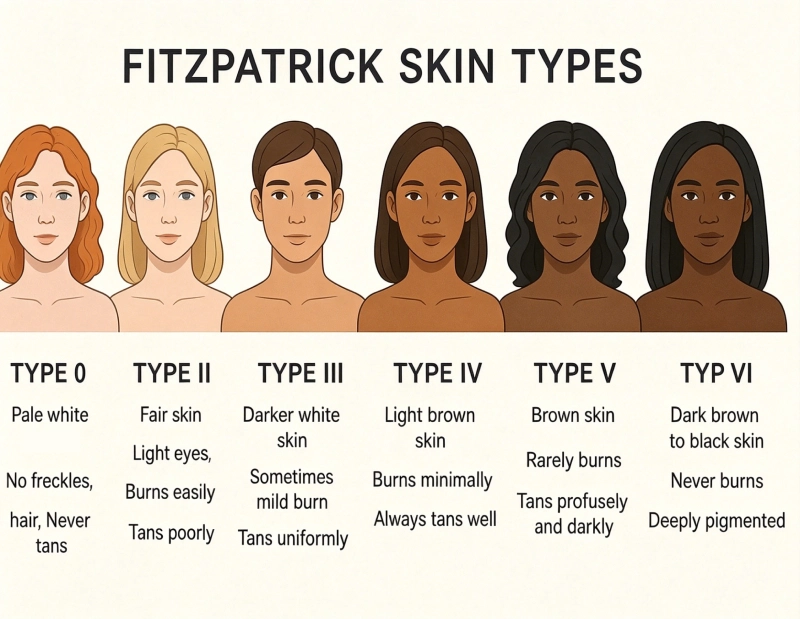
| Skin burns | often linked to wrong skin type matching or misuse | follow Fitzpatrick guidance; start low; patch test |
What Academic Reviews Say About Cellular Biomarkers
Academic reviews have discussed biomarker changes after IPL exposure (oxidative stress markers, inflammatory markers, apoptosis markers). These are not automatically “proof of harm.”
Key context:
- some cellular responses are consistent with photothermal stress and the intended mechanism of hair follicle disruption
- tumor suppressor pathways (such as p53) can activate as part of normal stress response and repair signaling
- risk concerns increase when treatments are performed improperly: excessive fluence, wrong candidates, wrong intervals, or poor technique
This is why “safe IPL” is not only a device question. It is also a use-conditions question.
FDA 510(k) Clearance: What It Does and Does Not Mean
FDA 510(k) clearance generally indicates the manufacturer demonstrated substantial equivalence to a legally marketed predicate device for the intended use.
What it does mean:
- the device follows a regulated pathway for the intended indication
- labeling, warnings, and controls meet the requirements of the pathway
What it does not mean:
- zero risk for every user in every scenario
- suitability for all Fitzpatrick skin types
- elimination of risk from user error
Practical Recommendations
- Verify regulatory status: prefer devices with verifiable FDA pathway information when targeting US consumer distribution.
- Know Fitzpatrick skin type: do not treat skin types outside the device’s supported range.
- Protect eyes: accidental exposure is avoidable with conservative practice.
- Avoid treating suspicious pigmented lesions: do not use IPL over moles or lesions you have not had evaluated.
- Follow intervals and start low: patch test, then ramp gradually within the manual’s safe guidance.
References (Links)
- Lin, M.-Y., Wong, T.-W., & Lin, C.-S. (2024). Revisiting Unaddressed Safety Concerns Regarding Intense Pulsed Light Treatment: Past and Present Perspectives. Photodermatol Photoimmunol Photomed, 40, e13005. https://doi.org/10.1111/phpp.13005
- Hutchison, A. M., Beard, D. J., Bishop, J., Pallister, I., & Davies, W. (2012). An investigation of the transmission and attenuation of intense pulsed light on samples of human Achilles tendon and surrounding tissue. Lasers Surg Med, 44(5), 397-405. https://pubmed.ncbi.nlm.nih.gov/22505339/
- Carcinogenesis related to intense pulsed light and UV exposure: an experimental animal study. Lasers Med Sci (2006). https://pubmed.ncbi.nlm.nih.gov/16964439/
- Paasch, U., et al. (2017). New lasers and light sources - old and new risks? J Dtsch Dermatol Ges. https://pubmed.ncbi.nlm.nih.gov/28485872/
Need a project-specific answer?
Talk to our manufacturing team
Contact the team to discuss your market, volume, compliance needs, and product direction.
Related articles